
Sports betting since 1998
Betting is a tool. It was never the point.
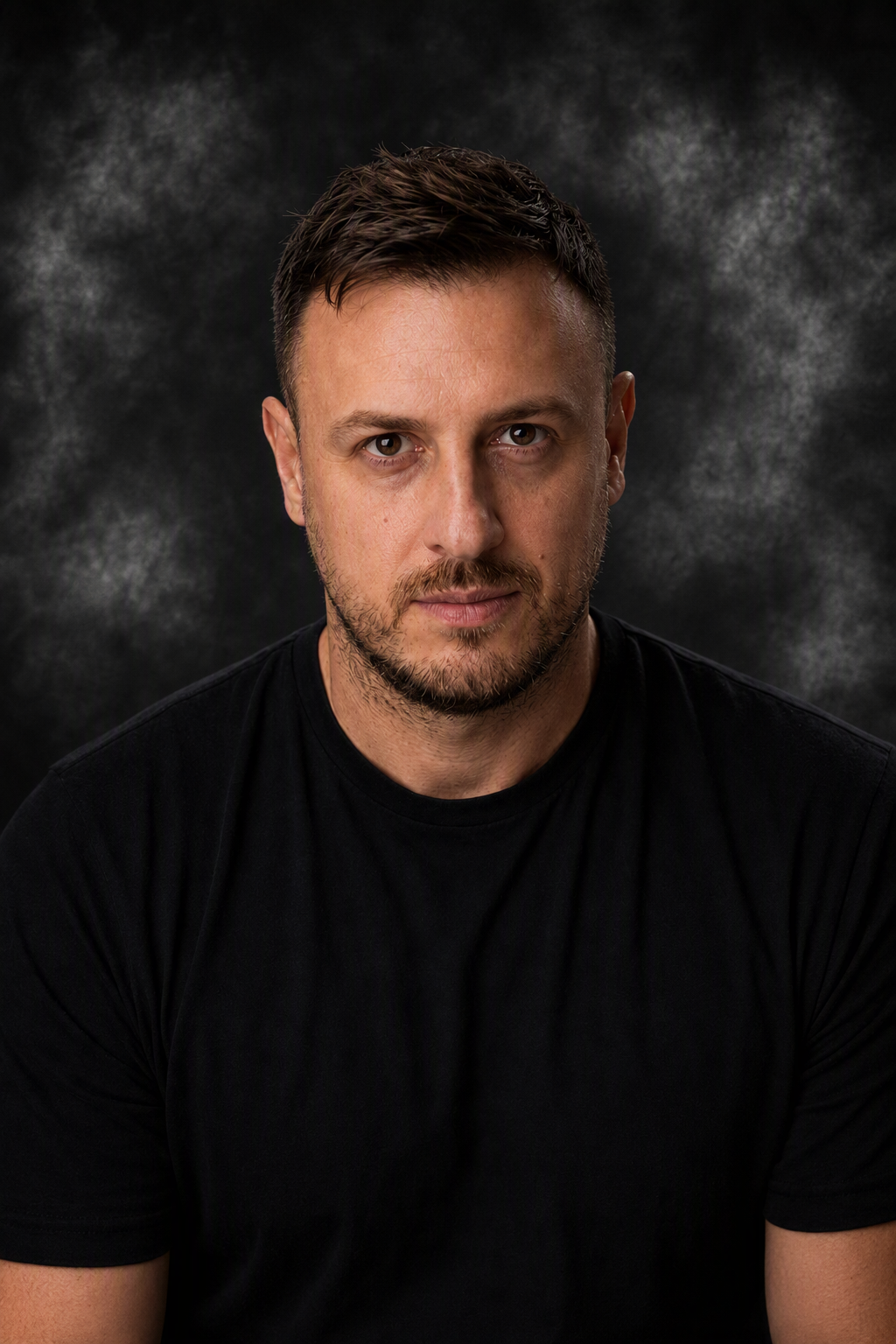
I am Marjan. Most people call me MB.
I have been betting since 1998 and building models since the early 2000s. I do not sell picks.
This page is the whole story, plus what I actually think about betting and about life.
How this started
My first real bet was not a prediction. It was a price.
The shop in my town was slow. The big online books moved their lines first, and my local shop sat on old numbers for hours.
So I stopped asking who would win and started asking which side was cheap. When the online books went from +7 to +3 and my shop still had +6.5, I bet it.
I did not know the sport better than anyone.
I just paid less.
That is still the idea behind everything I build today.
I moved to Ljubljana to study water science.
The coursework had me building probability models in Excel. That is where betting stopped being stories about teams and became numbers I could estimate and compare against a price.
In my final year I left to bet full time.
I bartended on weekends when the bets went badly. There were months when I could not pay the rent on my room.
The easy money ended.
Books banned me for arbing and for beating my local shop on price.
And I was losing on soccer, the sport I played and the sport my father kept goal in. I was too close to it to price it.
So I picked a new sport on purpose, using three rules: a market big enough to bet real money into, a deep statistical history, and no emotional attachment at all.
That was baseball.
I knew nothing about it. I learned the sport by playing MLB video games while I built the model.
The baseball model became a serious part of how I bet.
Over the years I was invited into private betting groups as the baseball guy.
A respected Vegas bettor once told me people around him checked my numbers in the morning because I was in Europe and my slate was already up while America was asleep.
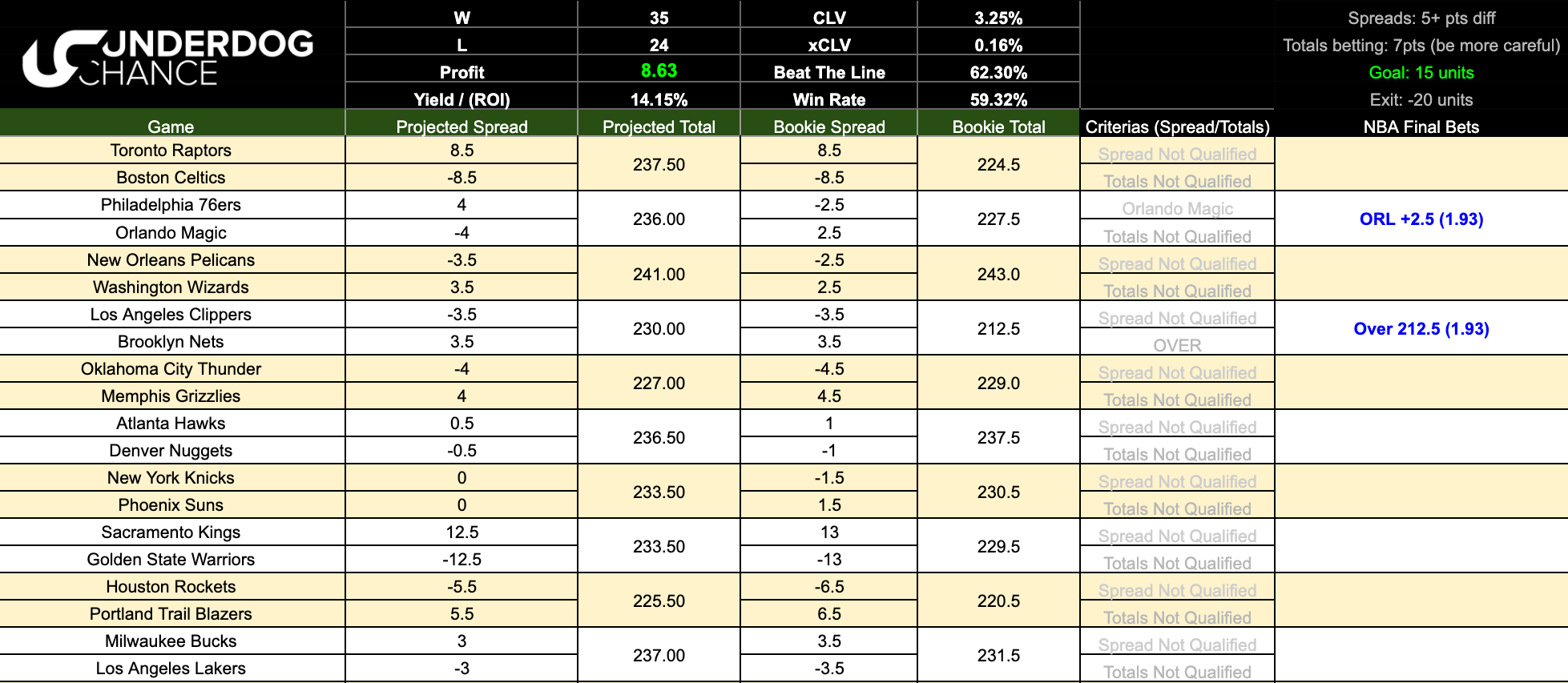
In 2015 I started posting screenshots and screen recordings of the models publicly.
I was not trying to build a betting-product business.
I was showing the work.
Eventually people started asking whether they could get the spreadsheets too.
After years of betting and building models for myself, I started teaching more of the process publicly.
I posted regular free videos showing the models, the numbers and how I thought about prices.
Later I released my first paid training.
That was the beginning of Underdog Chance as an education business.
It was not the beginning of my life in betting.
Underdog Chance has grown into models, training, analytical tools and an AI Assistant.
But the basic idea has not changed since the beginning:
Estimate the probability yourself.
Compare it with the price.
Bet only when the difference is worth taking.
Where I got lucky
I also got lucky, and I would rather say it than hide it.
My father taught maths and kept goal for the local team, so numbers and sport were in the house from the day I was born.
He taught at the village school, so I had a computer years before most people my age.
And when I finished school my aunt gave me a book about facing fear, which is how I found personal development early.
None of that was my doing.
What you do with it is the only part that ever belongs to you.
Why models and not picks
Discipline is not one of my natural strengths.
On the Gallup strengths test, Discipline ranked 30th out of 34.
So I stopped relying on willpower and built systems instead. The model decides before the game starts, and there is nothing left for me to talk myself into afterwards.
If you are the same, you do not necessarily need more self-control. You need a process that asks less of it.
The same test put relationships near the top. Positivity. Developer. Relator. Empathy.
That explains the other half of what I do. I have spent my life around numbers, but the part I enjoy is people.
A message from someone saying that something I showed them changed the way they bet has always meant more to me than a good month from one of my models.
That is why this site is full of tools and explanations instead of a picks feed.
Picks create followers.
I would rather you did not need me next season.
What I actually think about betting
The odds are the product
“I think the Chiefs win tonight” tells me almost nothing.
Would you bet them at -110? At -180? At -350?
The price changes everything.
The price is the only thing you are actually buying.
- YOUR NUMBER
- 58.0%
- MARKET PRICE
- -110 (1.91)
- MARKET IMPLIED
- 52.4%
- EDGE
- +5.6%
- VERDICT
- VALUE
Nobody in betting is innocent
I will say the part most people in this industry work around.
Betting is not growing tomatoes and selling them to a family who enjoys eating them, where both sides walk away better off.
In betting, your profit is someone else’s loss.
Maybe that person could not afford it. Maybe that money should have gone to his family.
So the moralising I see everywhere now looks strange to me.
One bettor uses maths. One uses better information. One uses marketing. One sells picks. One runs a podcast paid for by a sportsbook.
Everyone draws the moral line just past whatever they do themselves.
A friend of mine who does not bet at all thinks the whole game is unethical. From where he stands, all of us arguing about who is morally superior looks ridiculous.
He has a point.
What is left is adult responsibility.
Thousands of people see the same offer and walk away. The one who clicks buy believed the claim. That does not make the seller innocent, and it does not make the buyer a child either.
I run this business on that basis.
I tell you what the tools do and do not do.
I show losing months as well as good ones.
And I expect you to make your own decisions with your own money.
If you are looking for someone else to be responsible for your bankroll, this is the wrong site.
It is a competition against other people
Betting is relative.
You do not have to be good in some absolute sense. You have to be better than the people on the other side of your bets, and better than the price they are betting into.
That is why I keep rebuilding the models and keep showing the work in public.
The market grades you every single day, whether you look at the score or not.
Betting is one step, not the destination
- 1
BUILD YOUR FIRST BANKROLL
Arbs, bonuses, promos.
- 2
FIND EDGES
Models, market movement, information.
- 3
EXECUTE BETTER
Odds screens, line shopping, timing.
- 4
STAY PROFITABLE
Positive expected value, closing line value, bankroll rules.
- 5
BUILD WEALTH
Reinvest the profits.
- 6
BUILD FREEDOM
Create income that does not depend on you placing a bet.
I did this in the wrong order for years.
I built my life around betting instead of building betting around my life.
Betting is active income.
If it is your only income, you have a job with worse hours and no salary.
Take the profit and put it into something that pays you while you are not watching a game.
If you are trying to become a better bettor
I have been betting since 1998.
These are the things I would focus on if I had to start again today.
- 01
Learn probability before you learn systems.
If you do not understand implied probability, fair odds, margin and expected value, everything else is built on sand.
- 02
Stop judging bets by whether they won.
A bad bet can win. A great bet can lose. Judge the decision, not tonight's result.
- 03
Track every bet.
Odds, stake, closing line, result, and the reason you bet it. Your memory is useless for this.
- 04
Learn spreadsheets.
You do not need to become a programmer. But if you cannot test your own ideas, you will always depend on somebody else.
- 05
Stop betting on everything you have an opinion about.
You do not need action on every game. Most games should be a pass.
What I think about the rest of it
Freedom, not money
I never wanted to be rich. I wanted to be free.
Money does not buy happiness. What it buys is the right to say no.
No to work you hate, and no to a boss like the one I had when I was carrying drinks on Christmas Day with my family 200 miles away.
That alone makes a life lighter. It was the goal when I was broke, and it is still the goal now.
Create more than you consume
The best formula I have for a good life is that simple. Create more than you take.
It works for money, for work, for friendships and for a family.
Nothing is free
Free for you does not mean free for the person who built it. I think this should be taught in school.
If you want to make money, you have to sell something, and you have to ask people for money to get it.
The people who believe everything should be free are usually the ones who find it hardest to charge for their own work.
Respect what other people build. Price your own work properly. Do not talk yourself down.
People first
Almost everything I have built, I built because of other people.
Success is not very interesting if there is nobody to share it with.
Being a father
Becoming a father changed how I think about attention and responsibility more than any book did.
I wrote a parenting journal out of that period.
One idea from it has stayed with me longer than the rest:
“If you want an honest relationship with your child, create a safe space where they never have to worry about your feelings or how you will react.”
I might change my mind
I have changed my mind about most things at least once, and I expect to keep doing it.
If your opinions have not moved in ten years, you have not been paying attention.
After enough years around probability, being wrong is easier to accept.
A good decision can still lose.
A bad decision can still win.
Life does not tell you straight away which one you made.
“His vision of sports betting is exactly like mine: you absolutely need to mix statistical models with your own judgement in order to be successful in this business. Thanks MB for all the informative content related to sports betting, but more importantly, thanks for being a friend.”

David Beaudoin (Professor MJ)
Professional bettor · PhD in statistics · Professor at Université Laval
THINK FOR YOURSELF.
I've been betting since 1998 and building models since the early 2000s. In my emails I share how I think about probability, markets, models and risk, plus new tools, the occasional offer, and practical things you can actually use.
No picks. You get the method, so you can put your own number on a game and decide if the price is worth it.
Unsubscribe anytime.